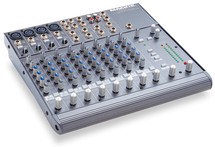
If you looked at most podcasts, they would look like this:
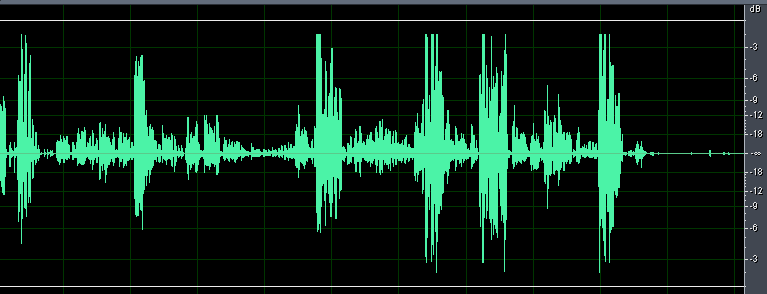
This podcast would be hard to listen to at a normal listening volume due to the wide dynamics. Dynamics compression is necessary for a number of reasons. Most of all is the ease of listening and the more professional sound.
Here’s a great article by Barry Rudolph if you want to read more about compression:
http://www.barryrudolph.com/mix/comp.html
Some people want to hear the dynamics control that I'm referring to. Click here for a short mp3 file that will show a recording with no dynamics control, and one with a moderate level of compression applied.
If you’re in agreement that audio quality is important for your podcast, I have several suggestions on how to achieve the right balance with gear and software.
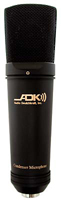
First, you need to start with a decent mic to record the human voice. A quick pick is the ADK A51 that sells for $125 or so. It’s a large diaphragm condenser mic that is similar in sound to a Neumann U87. I didn’t say identical, and if you have an extra $2000+ to spend and want to spend it on a mic, the U87 is a fine mic. Another good choice would be the CAD E100-2 ($200). Most podcasters have a very limited budget, so I’m here to help you sound great on the cheap. You’ll need a mixing board that has phantom power to be able to power the mic. Many Mackie or Eurorack boards will do just fine. The Mackie 1202VLZ ($270) has phantom power for the mic and sounds great.